Garage Door Cost: What You’ll Actually Pay in 2026
A new garage door is one of the better investments you can make in an exterior upgrade. According to the Remodeling Cost vs. Value report, a midrange garage door replacement returns roughly 90% or more of its cost at resale, making it one of the top-ranked projects for payback on the list. The garage door cost that scares most homeowners, though, is the wide range: a basic single door can run under $1,000 installed, while a premium insulated double door with a motor can push past $4,000.
That spread exists because garage doors are not one product. Material, size, insulation value, window count, and local labor all move the final number. In this guide we break down what you’ll pay in 2026 for materials and installation, where the money goes, and the two or three decisions that swing your total the most.
How Much Does a Garage Door Cost in 2026?
For most single-family homes in the US, the full garage door cost — door plus professional installation — lands between $750 and $4,000, with a national average right around $1,200 to $2,200. A basic builder-grade steel door starts near the bottom of that range. A custom wood or insulated glass-and-aluminum door sits near the top.
Here’s the range broken into three common tiers:
- Budget ($750–$1,200): Single-car, non-insulated steel door, standard sizes, limited design options.
- Midrange ($1,200–$2,500): Double-car steel door with insulation, nicer panel styles, a few windows.
- Premium ($2,500–$4,000+): Custom wood, full-view aluminum and glass, or carriage-house designs with high R-value insulation.
These figures assume standard sizes. If you’re pricing a single-truck RV-door opening or a two-door three-car garage, expect the number to climb quickly.
Garage Door Cost by Material
Material is the single biggest driver of your garage door cost, both for the door itself and for the maintenance you’ll sign up for later. Each option trades upfront price against looks, weight, and long-term care.
| Feature | Steel | Aluminum | Wood | Vinyl |
|---|---|---|---|---|
| Average cost (installed) | $750–$2,500 | $1,200–$3,000 | $1,500–$4,000+ | $900–$2,000 |
| Durability | High, with dents possible | Rust-free but dents easily | High with upkeep | High, dent-resistant |
| Maintenance | Low | Low | High (paint/stain) | Very low |
| Best for | Most homes, best value | Coastal/rust-prone areas | Curb appeal, custom looks | Kids, high-traffic garages |
Steel is the default for a reason. It’s the cheapest material that still holds up, and with insulation added it performs well in cold climates. Two-layer and three-layer steel doors (steel skin plus insulation and backing) dominate the midrange market.
Aluminum wins in humid or coastal regions because it won’t rust. The tradeoff is that it dents more easily than steel, which matters if a basketball or the neighbor’s car comes flying at it.
Wood remains the premium look — think cedar carriage doors — but it needs repainting or restaining every few years and it’s heavy, which strains the opener. Vinyl sits in a small corner of the market: it resists dents and never needs paint, but the style selection is thin.
One material detail that trips up first-time buyers: the “gauge” of a steel door refers to the thickness of the steel skin, and a lower number means thicker metal. A 24-gauge door will dent where a 26- or 27-gauge door won’t. Big-box stores lean on thin-gauge doors to hit a price point, so check the gauge before you compare two quotes that look identical on paper.
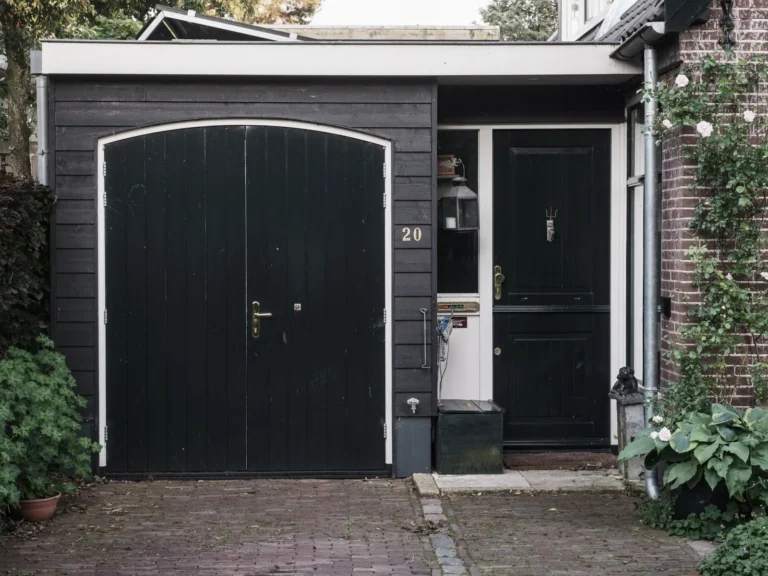
Photo by Jan van der Wolf via Pexels
Garage Door Cost by Door Type
Beyond material, the style of door you pick changes the price. Here are the four configurations you’ll see quoted most often:
- Single-car door (8’–9′ wide): $400–$1,500 for the door, $250–$500 for installation.
- Double-car door (16′ wide): $800–$3,500 for the door, $400–$700 for installation.
- Two single doors on a three-car garage: generally $200–$600 more than one double door because you pay for two separate tracks and, usually, two openers.
- Custom-size or RV-height doors: add 25–50% to the price of a comparable standard door.
A note on openers: if the existing opener is more than 10–12 years old, budget $250–$550 on top for a new one. A modern belt-drive opener is dramatically quieter than the chain-drive unit it’s probably replacing.
Labor and Installation Costs
Labor for professional installation typically runs $250 to $650 per door, depending on where you live and whether the old door needs to be removed. Most companies include haul-away of the old door and hardware in the quote — confirm that, because it’s a $50–$150 line item you don’t want as a surprise.
Installation on a replacement (new door onto existing tracks and framing) is cheaper than a new installation, which involves fresh framing, trim, and weatherstripping on top of the door itself. New construction also exposes problems: a warped header or out-of-square opening adds carpentry time.
Two realities worth planning for:
- Spring replacement: even if your door is fine, a broken torsion spring runs $200–$350 to replace. These are among the most common garage repairs in the country.
- Permits: many municipalities charge $50–$200 for a garage door permit. A licensed installer usually pulls it for you.
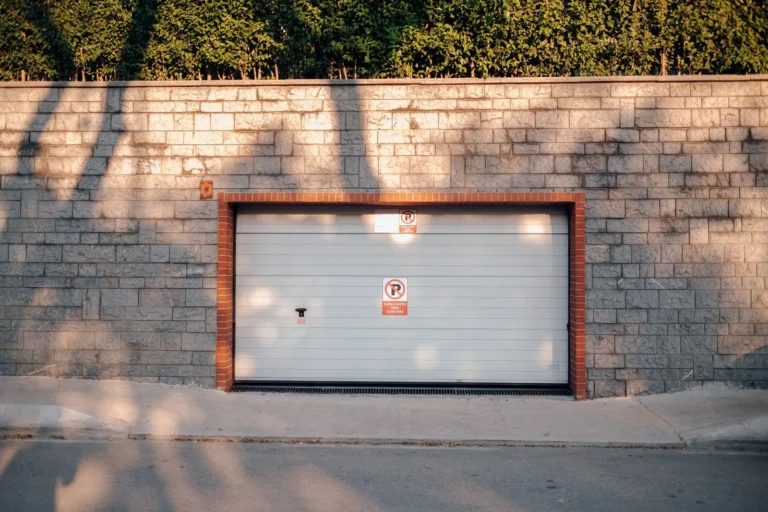
Photo by Arlind D via Pexels
Factors That Move Your Garage Door Cost Up or Down
Small choices compound. These are the levers that separate a $900 job from a $3,000 one:
- Insulation (R-value): a non-insulated door has essentially no thermal value. A two-layer door with polystyrene adds a few hundred dollars; a three-layer door with polyurethane foam can raise the door price 30–40% but pays off in an attached, heated garage.
- Windows: adding two or four decorative glass panes typically adds $150–$400. Frosted or insulated glass costs more than plain.
- Size: wider than 16 feet, taller than 8 feet, or non-standard — all trigger custom pricing.
- Finish: factory-finished colors are cheap; faux-wood grain and custom colors carry upcharges of 10–20%.
- Location: labor in the Northeast and Pacific Northwest runs 20–30% above the national average. If you live somewhere remote, haul-away and service fees climb too.
Smart openers and accessories to budget for
If you’re replacing the door anyway, it’s a good moment to add a few features that cost little now but get expensive as afterthoughts:
- Smart opener or controller: a Wi-Fi-enabled opener with a smartphone app runs $180–$350 and lets you check whether the door is closed from anywhere.
- Battery backup: $60–$150, so the door still works during a power outage.
- Keypad entry: $35–$70, handy for kids and guests who don’t carry a remote.
- Motion-sensor or timer lighting: most openers include a basic light; upgraded panels add $40–$100.
Because the door itself accounts for the majority of the number, upgrading material and insulation has a bigger impact on your total than any labor negotiation ever will.
DIY vs. Professional Installation
Installing a garage door is one of the riskiest DIY projects in a typical home, and most pros describe it as a two-person job even when it goes smoothly. The torsion spring that does the heavy lifting is under enormous tension, and the tools to safely handle it are specialized. The door panel sections alone can weigh a few hundred pounds.
A DIY install can save you the $250–$650 labor line item, but you should only attempt it if you’re buying a door with a pre-wound or torsion-bar system designed for homeowner installation, and even then you’ll want a helper. Given that a botched installation can damage the door, the opener, or a person, paying a licensed installer is usually cheap insurance — and warranty claims on most doors require professional installation.
Frequently Asked Questions
How much does a garage door cost including installation?
Plan on $750 to $4,000 all-in for a standard home. The average sits between $1,200 and $2,200 for a midrange insulated steel door professionally installed.
What is the cheapest garage door material?
Non-insulated steel is the least expensive option that will still last. Expect roughly $750 to $1,200 installed for a single door.
How long does a garage door last?
A decent steel door lasts 15 to 30 years depending on climate and maintenance. Springs typically need replacing every 7 to 10 years, and openers every 10 to 15.
Does a garage door add value to a home?
Yes. A garage door replacement consistently returns 90% or more of its cost at resale — one of the highest recovery rates of any home improvement project, according to Remodeling magazine.
Can I replace just the door and keep my old opener?
Usually, yes — but match the new door’s weight to the opener’s rating. If the new door is heavier (wood or heavily insulated steel), a weak opener will struggle and burn out early.
The Bottom Line
Garage door cost is a $750-to-$4,000 question where the answer is mostly set by the choices you make before you ever call for a quote. For the largest share of homeowners, a double-car, insulated steel door at $1,200 to $2,500 installed is the sweet spot between price, durability, and the value you’ll get back when you sell. Go aluminum near the coast, wood for curb appeal, and skip windows and high-R insulation only if your garage is detached and unheated.
Get three written quotes, ask each contractor to break out the door, labor, haul-away, and opener costs separately, and confirm the warranty length in writing. If you’re pricing the door as part of a bigger build, start with our guides to detached garage cost to build and the detached garage vs. attached garage cost tradeoff. And if your budget leans toward a simpler structure, compare the numbers in our carport cost breakdown.
For detailed material and maintenance guidance, see the garage door buying guide from Bob Vila and the garage door installation walkthrough at Family Handyman.