Front Porch vs Deck: Which One Belongs on Your Home?
A front porch and a deck both add usable outdoor square footage, but they are not the same structure. If you are weighing a front porch vs deck for your next project, the real deciding factors are location, roof coverage, building cost, and how you plan to spend time outside. Most homeowners are surprised to learn the two aren’t interchangeable.
A porch is a covered, attached structure that almost always faces the street and shelters the front door. A deck is an open platform, usually behind the house, built for entertaining, dining, and soaking up sun. The cost to build, the permit rules, and the return at resale all diverge from there.
Here is how the two really compare, what each one costs, and how to pick the right one for your house.
Front Porch vs Deck: The Core Differences
At the simplest level, a porch is for arriving and a deck is for lingering. A front porch greets guests, shields you from rain while you unlock the door, and gives the house a face on the street. A deck is a private outdoor room out back where you grill, host, and relax.
| Feature | Front Porch | Deck |
|---|---|---|
| Typical location | Front of house, street-facing | Backyard or side yard |
| Roof or cover | Usually covered | Usually open (pergola optional) |
| Primary use | Welcoming guests, sitting, curb appeal | Entertaining, dining, grilling |
| Typical size | 80–200 sq ft | 200–600 sq ft |
| Attached to | Front door and entryway | Rear or side wall, or freestanding |
| Average build cost | $4,000–$18,000 | $5,000–$20,000 |
The table tells the story: a porch is smaller, covered, and public; a deck is larger, open, and private. Neither is strictly “better” — they answer different questions about how you want to live outside.
What a Front Porch Brings to a Home
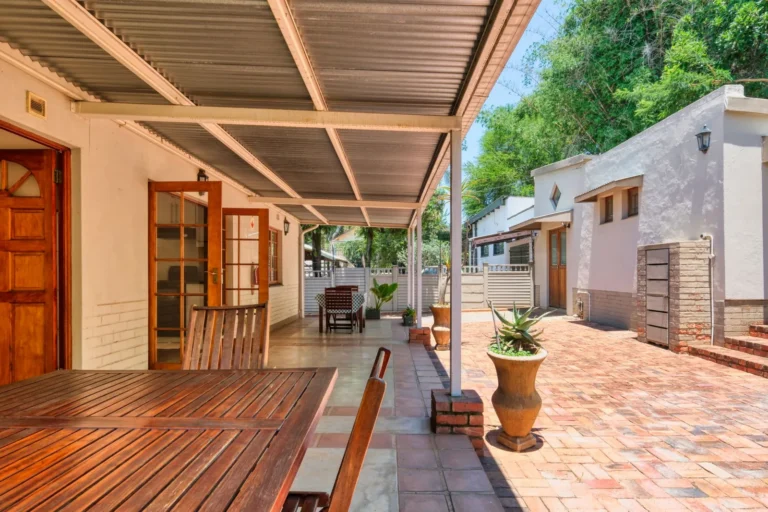
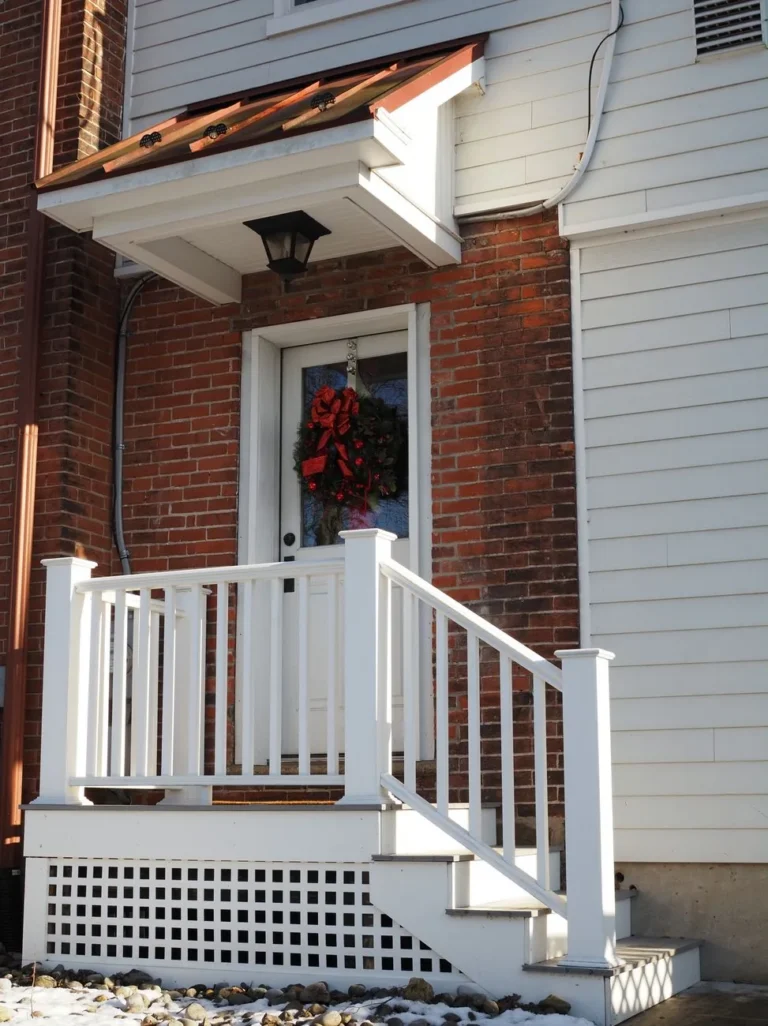
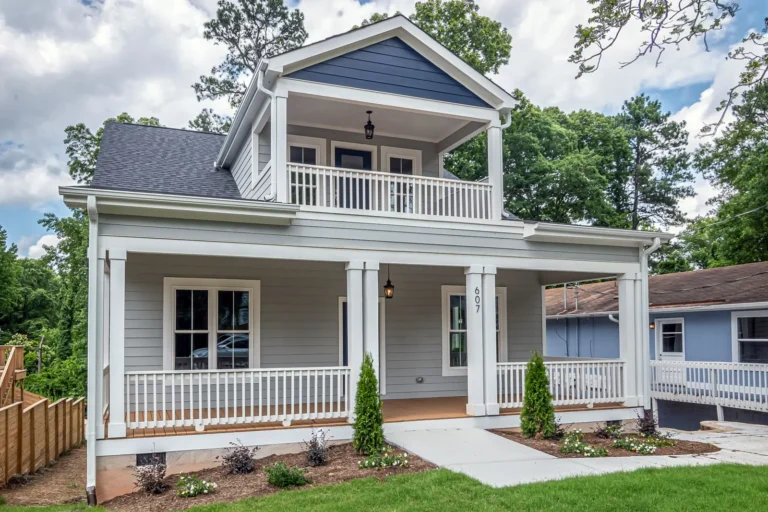
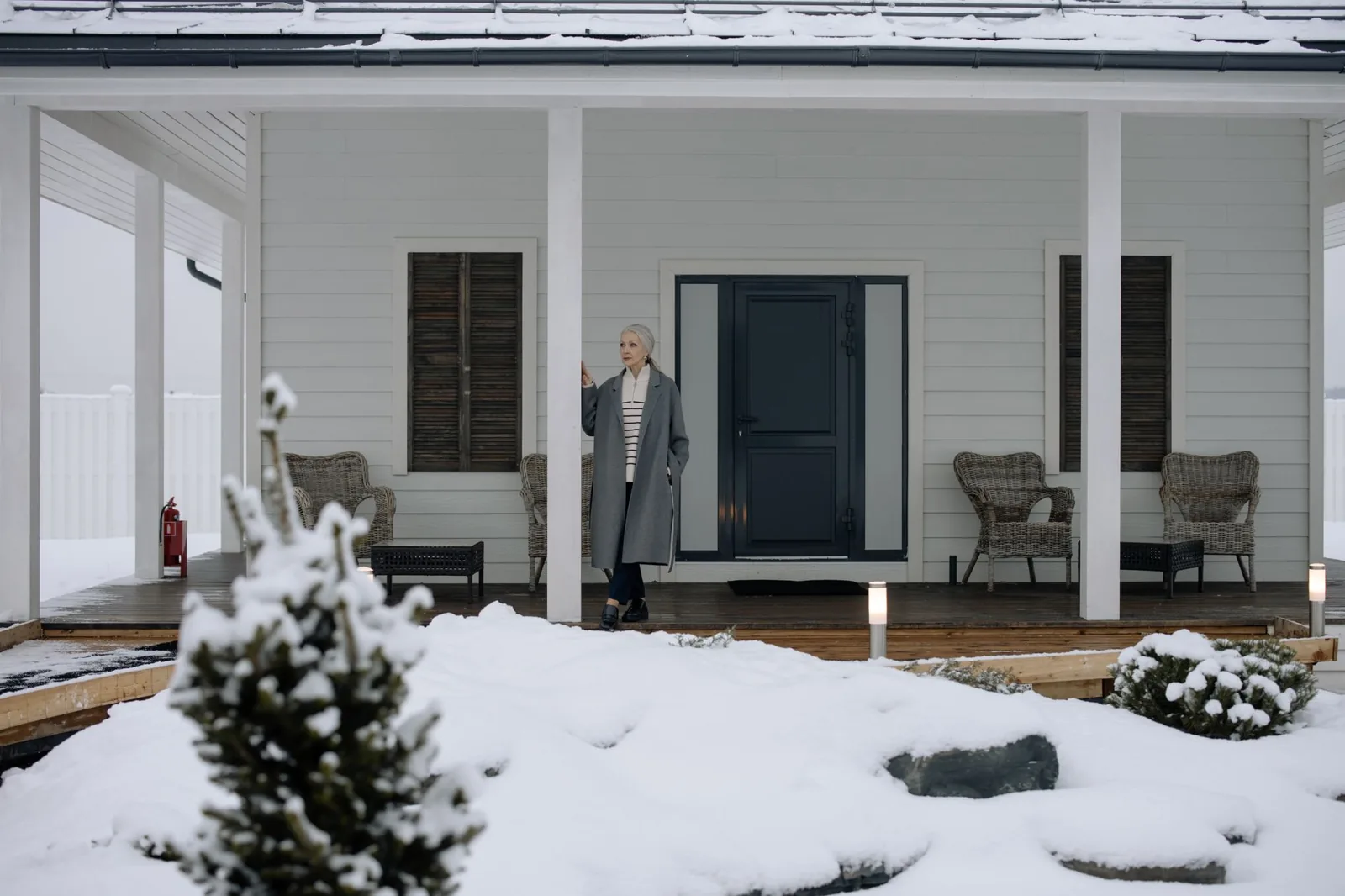
A front porch is first an architectural statement. On a farmhouse, a craftsman bungalow, or a colonial, a deep covered porch with columns and a railing gives the front elevation character that a bare stoop never will. It is also practical: you and your guests stay dry while you fumble for keys, packages sit out of the rain, and you get a shaded place to sit without retreating to the backyard.
Functionally, a porch shades the front wall and door, which can trim cooling loads in summer in hot climates when the porch faces south or west. It also becomes a neighborhood space — the spot where you wave to people walking by, watch kids play, and keep a couple of rockers or a porch swing. That street-facing social role is something a backyard deck simply cannot copy.
The catch is that a porch needs a roof. The roof means footings, posts, roof framing, flashing where it ties into the house, and a finished ceiling. This is real structural work, which makes a covered porch comparatively expensive per square foot even though the footprint is small. If you want that space fully screened in later, the framing already gets you most of the way there — see our guide to enclosed porch costs.
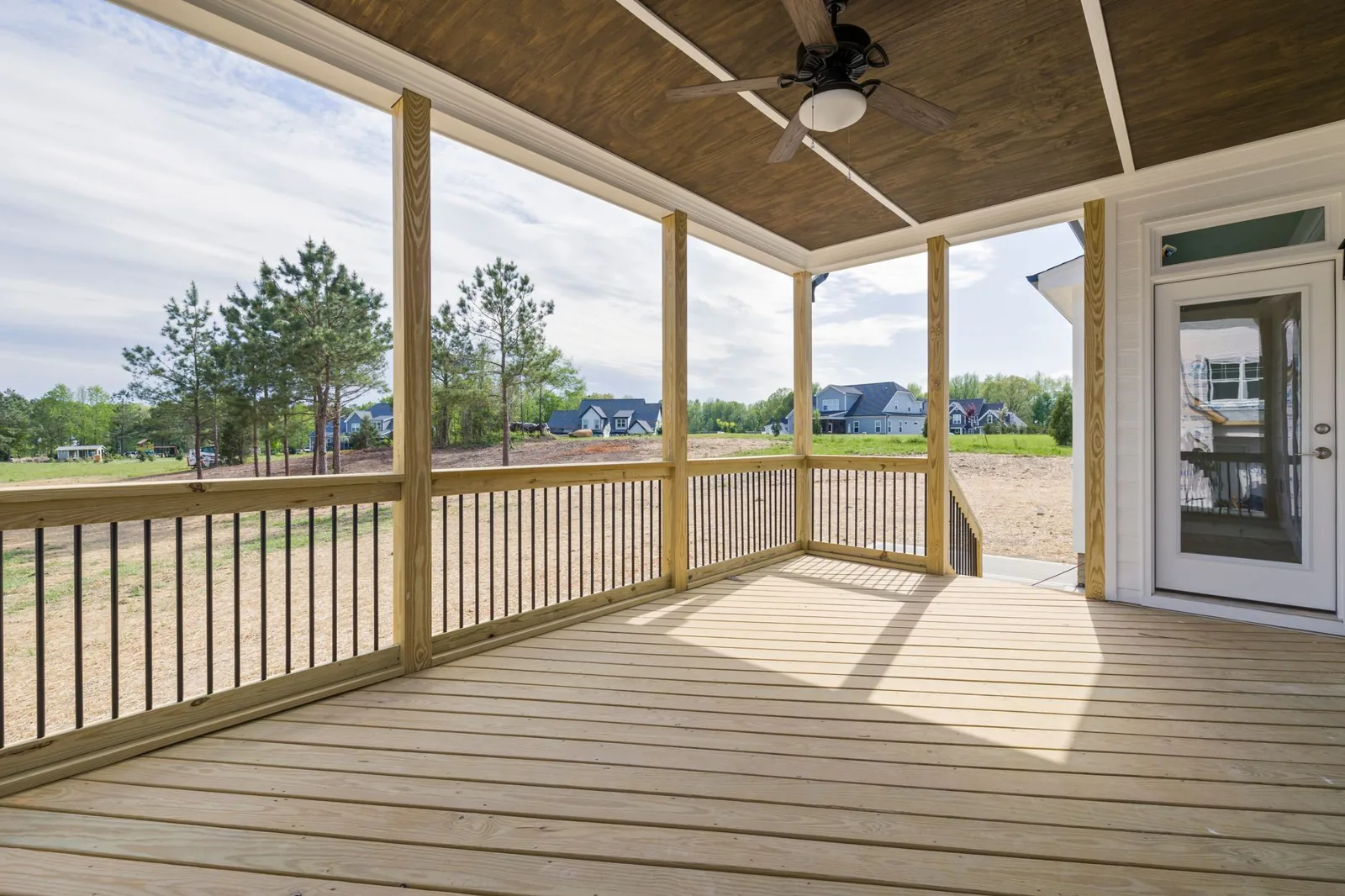
Photo by Curtis Adams via Pexels
What a Deck Adds (and Where It Lives)
A deck is an elevated, open platform that extends your living space into the yard, usually off the kitchen or family room. Because there is no roof, a deck is a sun-and-shade space you control with umbrellas, a pergola, or nearby trees. It is built for action: the grill, an outdoor dining set, lounge chairs, and often a hot tub or fire pit.
Decks are measured the way rooms are, by total square footage. A modest 12 x 12 deck gives you 144 square feet; a full entertaining deck runs 300 to 600 square feet and up. The framing is straightforward — a ledger board bolted to the house, footings and posts, joists, decking boards, and railings — which is why decks scale up in size more affordably than a roofed porch does.
Material choice drives both price and upkeep. Pressure-treated southern yellow pine is the budget workhorse, cedar and redwood add natural looks at a higher price, and composite decking from brands like Trex and TimberTech costs more up front but barely needs maintenance. Each material shifts both the build cost and the long-term care routine, which we get into below.
Cost to Build: Porch vs Deck
Cost is where the two structures part ways most visibly. A deck scales by area, while a porch carries fixed costs from its roof no matter how small it is.
For a deck, installed costs typically run $15–$35 per square foot for pressure-treated wood and $30–$60 per square foot for composite, including framing, footings, railings, and labor. A 16 x 20 (320 sq ft) wood deck lands around $5,000–$12,000; the same footprint in composite runs $10,000–$19,000. These are national midpoints — material prices and local labor rates swing them up or down by region.
For a front porch, you are paying for a small roof, footings, posts, and framing. A straightforward 8 x 10 (80 sq ft) covered porch typically costs $4,000–$8,000, while a larger porch with a gabled roof, decorative columns, and a composite floor can hit $15,000–$30,000. The roof is the hidden driver: per square foot, a covered porch often costs more than a deck because the roof, flashing, and ceiling eat a big chunk of the budget before you even get to flooring.
If porches are your direction, dig into the numbers with our breakdown of front porch costs and what it costs to build a front porch from the ground up.

Photo by Iris Carvalho Foto via Pexels
Resale Value and ROI
Both structures add value, but they add it differently. A deck is one of the few projects with solid, published resale data. The Remodeling Cost vs. Value report has consistently shown a wood deck recouping roughly 65–85% of its cost at resale depending on region, while composite decks recoup less — often 40–50% — because of their higher up-front price.
A front porch is harder to isolate in resale statistics, but it pays off through curb appeal. Real estate agents consistently list a covered front porch among the features buyers respond to in a listing photo, and a house with a strong front entry photograph sells faster and for more in many markets. The value shows up in first impressions and sale speed more than in a clean percentage you can put in a spreadsheet.
The honest takeaway: if you want a measurable, largely recoverable investment, build the deck. If you want to lift your home’s street presence and daily livability, the porch earns its keep in ways that are real but less easy to itemize.
Durability and Maintenance
Maintenance depends more on materials than on whether you build a porch or a deck, but the roof changes the equation for porches.
A wood deck needs attention every couple of years — cleaning, and then staining or sealing to keep boards from graying and cupping. Left alone, pressure-treated pine may last 10–15 years, while well-maintained cedar or redwood can go 20 or more. Composite decking barely needs anything beyond an occasional wash, which is exactly what you are paying for.
A covered porch protects its floor and framing from direct sun and rain, which slows rot and fading. But the porch roof itself ages like the rest of your house: shingles or metal panels eventually need replacing, and the posts and railings need paint or stain on a similar cycle to a deck. A porch with a composite or tile floor will outlast one with wood boards.
Either way, budget for upkeep from the start. A structure you can’t afford to maintain becomes a liability in a few seasons.
How to Decide Between a Front Porch and a Deck
Run through these five questions and the answer usually gets obvious fast.
- Where do you spend time outside? If your outdoor life is grilling and entertaining, choose a deck out back. If you want to sit out front and connect with the neighborhood, choose a porch.
- What does your lot look like? Small front yard but a wide backyard favors a deck. A house set close to the street with a plain entry favors a porch.
- Do you need cover? A porch gives shade and rain protection by default. A deck needs umbrellas or a pergola to get the same comfort.
- What is your budget? For a small, covered entry-level porch, budget $4,000–$8,000. For a real entertaining deck, plan on $5,000 and up — more for composite.
- What sells in your neighborhood? Drive your street. If every house has a porch and yours doesn’t, that is a signal. If backyards are the showpiece, match that instead.
You don’t have to choose one forever. Plenty of homes have both — a modest front porch for arrival and curb appeal, and a rear deck for the serious outdoor living. If budget is tight, build the one you will actually use every week first, then add the other later.
Frequently Asked Questions
Is it cheaper to build a front porch or a deck?
A deck is usually cheaper to build per square foot because it has no roof. A basic wood deck can run $15–$35 per square foot, while a covered porch often costs more per square foot because the roof, footings, and framing carry fixed costs even on a small footprint.
Can a deck be turned into a porch?
Not exactly — a deck is an open platform, and adding a roof plus the required footings and framing essentially means building a porch on top of existing deck structure. In practice, most people build a covered porch from the start rather than converting a deck, because the footings and posts usually need to be bigger to carry a roof.
Does a front porch add more resale value than a deck?
They add value differently. A wood deck has documented resale value of roughly 65–85% of cost, while a porch adds value mainly through curb appeal and faster sale. For a clean, measurable return, the deck wins; for street presence, the porch wins.
Do I need a permit for a porch or a deck?
Yes, in nearly every US municipality, both a deck and a covered porch require a permit because they involve footings, structural connections, and often electrical or railing-height codes. A porches roof also triggers additional framing and flashing inspections.
Which is better for a small yard?
A front porch usually fits better because it works in the narrow strip between your house and the street and doesn’t eat backyard space. A deck needs room to feel open, which makes it a poor fit for a tight lot.
The Bottom Line
The “front porch vs deck” choice really comes down to where you live your outdoor life. Pick a deck if you want a private, open entertaining space out back with a measurable return. Pick a front porch if you want curb appeal, covered entry, and a place to sit out front and know your neighbors.
Many homeowners start with the one they will use most, then add the other when the budget allows — a covered porch up front and a deck out back is a classic, complete combination. Before you pull a permit, confirm your local building codes, get three written quotes, and check the authoritative guides at This Old House and Bob Vila for step-by-step construction details.
Whichever you choose, get the structure right the first time. A well-built porch or deck lasts decades and pays you back in comfort, curb appeal, and resale value — a cheap one becomes next season’s repair bill.