Entryway Ideas That Make a Strong First Impression
The entryway is the first thing a guest sees and the last thing your family touches on the way out the door. A well-designed entry does two jobs at once: it tells visitors your home is cared for, and it quietly keeps coats, shoes, keys, and mail from spilling into the rest of the house. The best entryway ideas balance those two priorities, and most of them cost far less than the impression they leave behind.
You do not need a grand foyer to make this space work. A 5-by-7-foot landing near the front door, a narrow hallway, or the back entry off the garage can all become a functional, good-looking entry with a few deliberate choices. This guide walks through concrete entryway ideas, with real price ranges and specific products, so you can pick the ones that fit your space and budget.
Start With the Function: Where Does the Clutter Go?
Before you buy anything, watch how your household actually uses the entry for a week. Piles of shoes, backpacks dropped on the floor, and keys hunting for a home will tell you exactly what the space needs to solve. Most entryways suffer from one of three problems: no place to sit, no place to put things down, and no place to put things away.
The fix for each is specific:
- No place to sit: A bench or a single chair gives people a spot to pull boots on and off. A shoe bench with cubbies underneath solves sitting and storage in one piece.
- No place to put things down: A console table, a wall-mounted shelf, or a floating ledge about 30 inches high catches keys, mail, and sunglasses the moment you walk in.
- No place to put things away: Closed storage such as a cabinet, a basket-lined cubby, or a wall of hooks handles the rest.
A common mistake is buying decorative pieces first and adding storage later. Reverse the order. Solve the function, then layer in the style, and the room will hold up to actual daily use instead of looking good only in photos.
Entryway Ideas by Budget
Entryway projects scale from a single afternoon under $100 to a full custom build that costs several thousand dollars. Here is how the numbers typically shake out for a standard single-door entry.
Under $100: Instant Wins
- A row of coat hooks from a brand like Home Decorators Collection runs $15 to $40 for a set of five, and installing them takes one afternoon with a drill and a stud finder.
- A bench from IKEA, such as the classic HEMNES or a slatted SKOGSTA, lands between $80 and $150 and doubles as a shoe shelf.
- A laundry-basket style bin or two woven baskets ($20 to $40 each) corrals shoes or reusable grocery bags without needing any installation.
- A welcome mat made of coir ($15 to $30) and a small tray or dish for keys ($10 to $20) finish the functional core.
$100 to $500: Real Storage
This is the sweet spot for most homes. At this price you can add a console table (Wayfair and Target both carry solid-wood-look options from $120 to $300), a wall-mounted coat rack with a shelf ($60 to $150), and closed shoe storage such as a narrow cabinet or a bench with flip-top seats. Add a runner rug sized to your hall (a 2-foot-by-6-foot runner runs $40 to $150) to define the zone and protect the flooring from wet shoes.
$500 to $2,000+: Built-Ins and Custom
If your entry is a permanent mudroom-style space, a custom built-in bench with cubbies and a beadboard back is the top-tier solution. A carpenter or trim contractor typically charges $1,500 to $3,500 for a painted built-in with bench seating, upper hooks, and lower cubbies, depending on size and whether you add drawers. Pre-fabricated mudroom units from brands like Lefroy Brooks or prepackaged locker systems from Pottery Barn Kids run $800 to $2,500 and install in a day.
Comparison: Storage Approaches at a Glance
| Feature | Coat Hooks + Bench | Console Table + Baskets | Built-In Bench + Cubbies |
|---|---|---|---|
| Typical cost | $100–$250 | $250–$600 | $1,500–$3,500+ |
| Installation | DIY, ~1–2 hours | DIY or minor assembly | Pro install, 1–3 days |
| Seating | Bench only | None | Built-in seating |
| Closed storage | Minimal | Baskets/closed console | Fully concealed |
| Best for | Tight budgets, renters | Larger entries, style focus | Permanent mudroom, resale value |
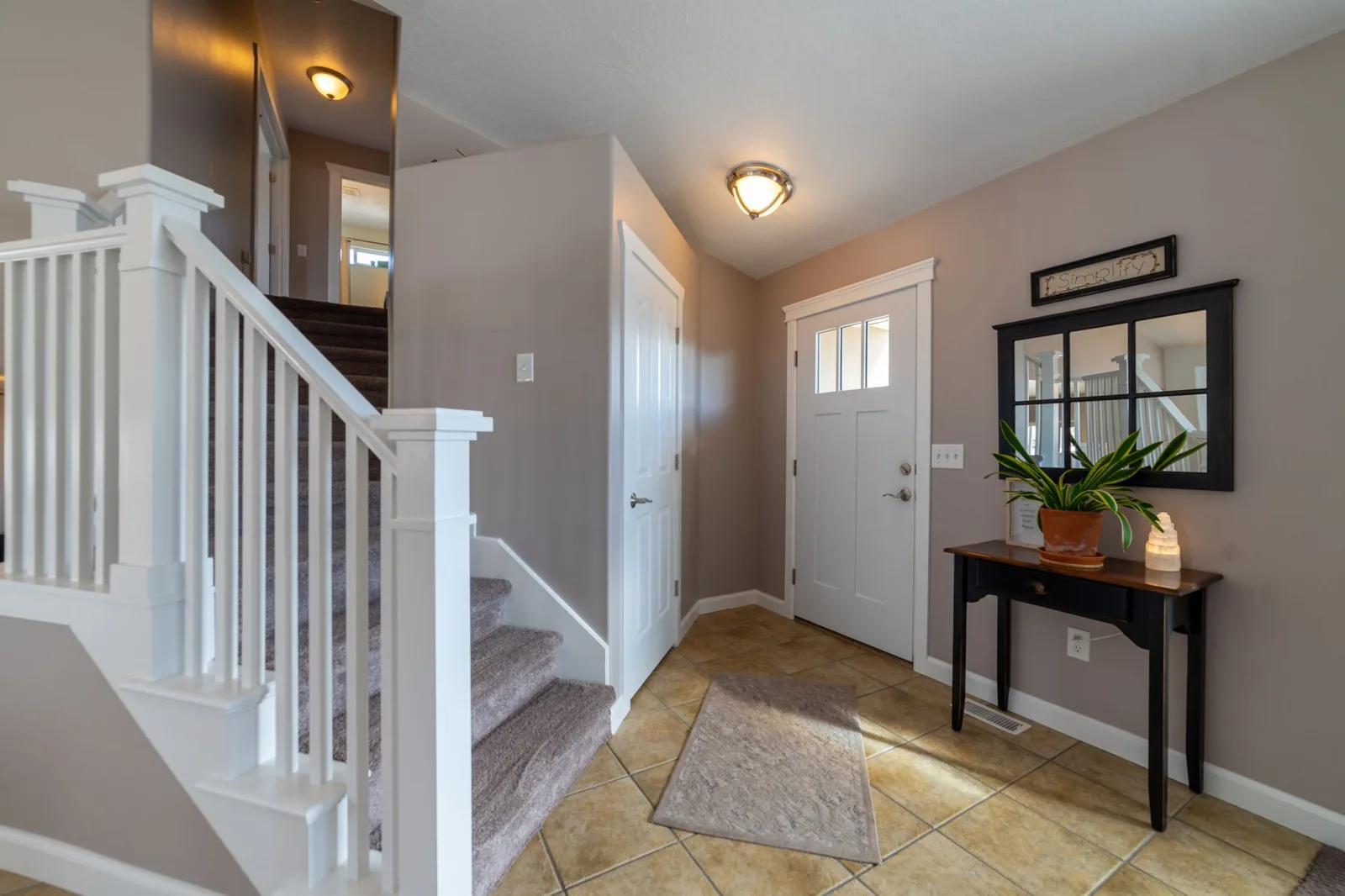
Photo by Get Lost Mike via Pexels
Light, Color, and the Psychology of a Welcoming Entry
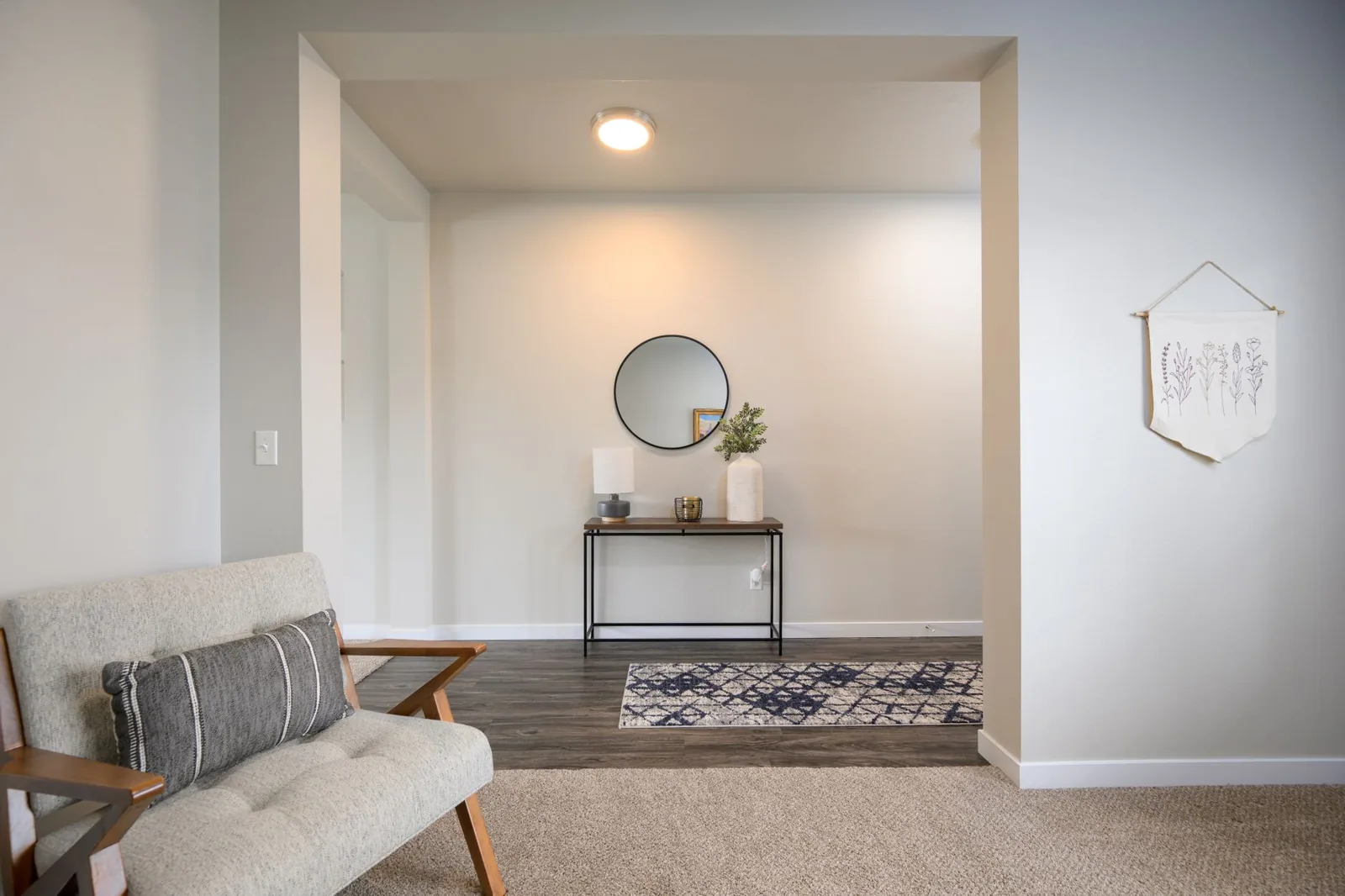
Lighting does more for an entryway than any single piece of furniture, because it is the first thing the eye registers. If your front entry has a single overhead fixture, swapping it for a semi-flush mount or a small chandelier at $80 to $250 instantly changes the room’s feel. Choose a fixture sized to the space: a general rule is the diameter of the fixture in inches should roughly equal the room’s length plus width in feet.
Layering lights beats a single source. A table lamp on the console ($30 to $80) and a warm LED bulb around 2700K soften a harsh overhead and make the entry read as a room rather than a hallway. If you have no floor space for a table, a plug-in sconce ($40 to $120) mounted above a bench works without rewiring.
Paint is the cheapest transformation in the house and it matters most at the door. Pale, warm neutrals such as soft greige or warm white reflect light and make a small entry feel larger. One bold accent wall in a deep green, navy, or terracotta behind a console or bench is a low-risk way to add character to an otherwise plain landing.
Add a Rug, a Mirror, and Layers of Texture
Three low-cost layers turn a functional entry into a finished one:
- A rug or runner grounds the space and signals where the entry “ends.” Choose a low-pile, indoor-outdoor material such as polypropylene or a flatweave wool so it survives wet shoes and is easy to vacuum.
- A mirror opens up a narrow entry and gives you a last-check on the way out. A round brass or black-framed mirror 20 to 30 inches across costs $60 to $200 and reflects whatever light the room has.
- Texture through materials — a woven basket, a wood bench, a matte ceramic bowl for keys, and a few plants — keeps the space from feeling like an afterthought. A low-maintenance plant such as a snake plant or pothos survives the low light of most entries and needs water only every couple of weeks.
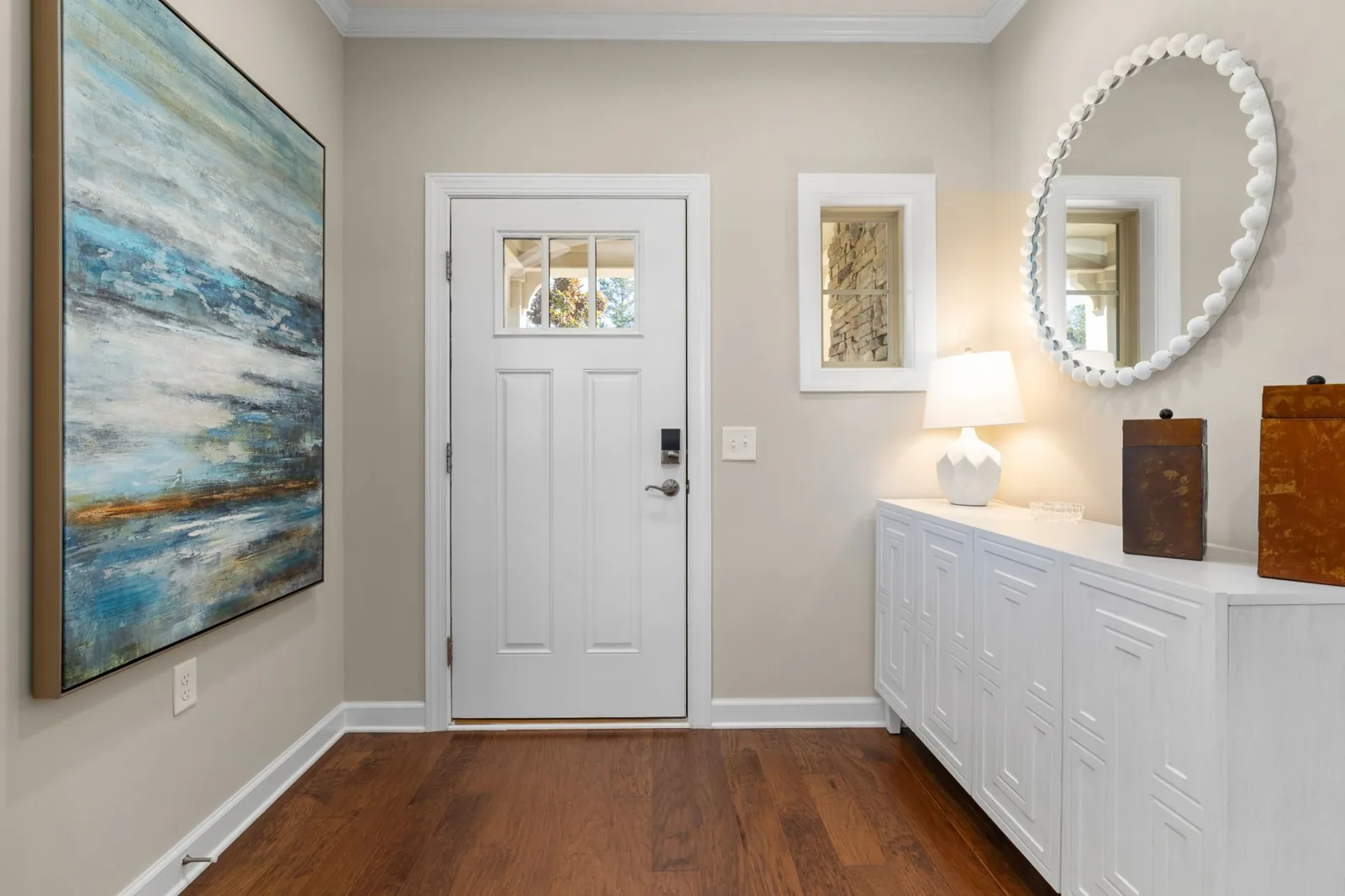
Photo by Curtis Adams via Pexels
Entryway Ideas for Small or Awkward Spaces
Not every home has a true foyer. A front door that opens directly onto the living room or a narrow staircase wall is common in older homes, townhouses, and apartments, and it changes the strategy.
For a door that opens straight into a room, define the entry with a vertical boundary instead of a wall. A tall shelf unit or a slim console perpendicular to the door creates the suggestion of a separate zone without closing anything off. A runner placed at a right angle to the doorway marks the traffic path.
For a tight wall, go vertical and shallow. A wall-mounted coat rack with a shelf above it projects only 10 to 12 inches and still handles coats, hats, and a small tray for keys. Magnetic strips or key hooks mounted just below eye level keep essentials visible without consuming floor space.
For homes with no coat closet at all — very common near front doors in mid-century and newer-open-plan builds — a freestanding hall tree is the single best buy. Hall trees from $120 to $400 combine a bench, a back with hooks, and lower shoe storage in a footprint under 3 feet wide, and they look intentional rather than like a storage workaround.
Tie the Entry to the Rest of the Exterior
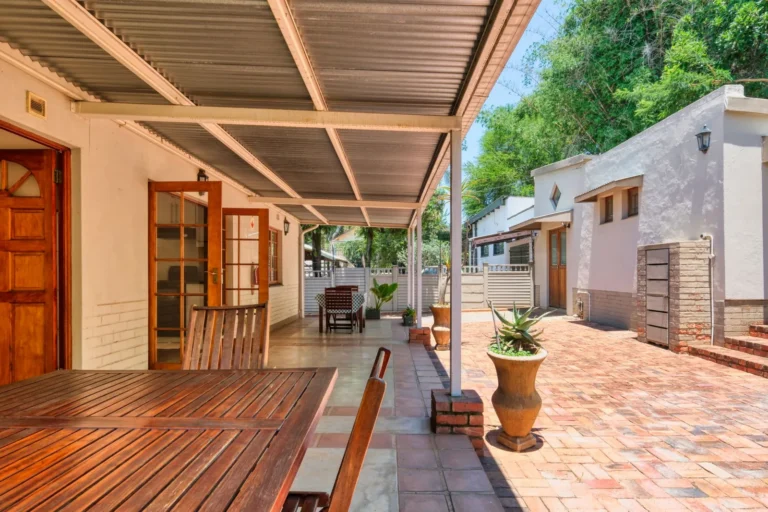
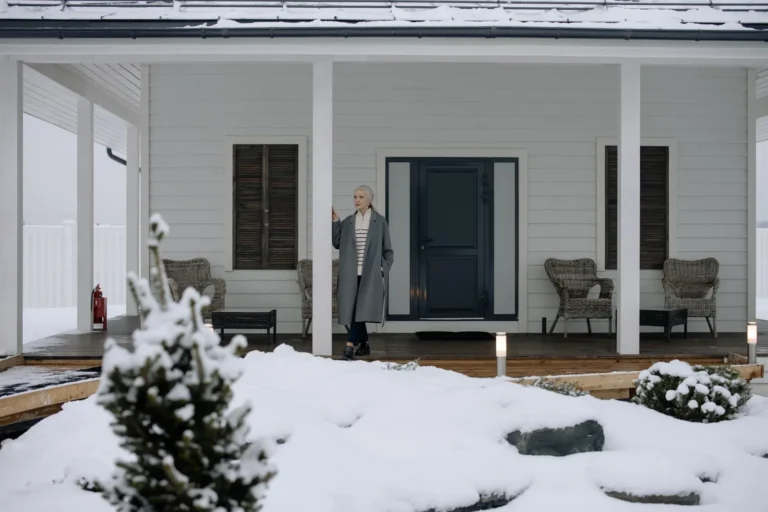
Your entryway does not stop at the door — it connects to your porch, your front landscaping, and the exterior details visitors see while they wait for you to answer. Before committing to an indoor entry refresh, think about how the two relate.
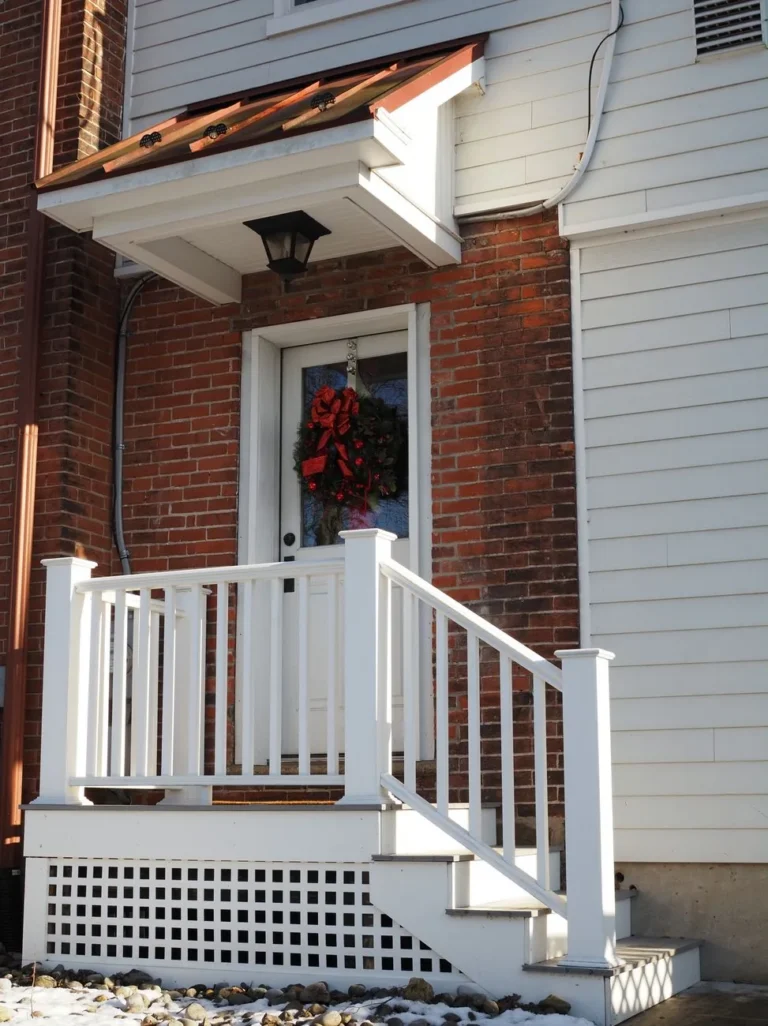
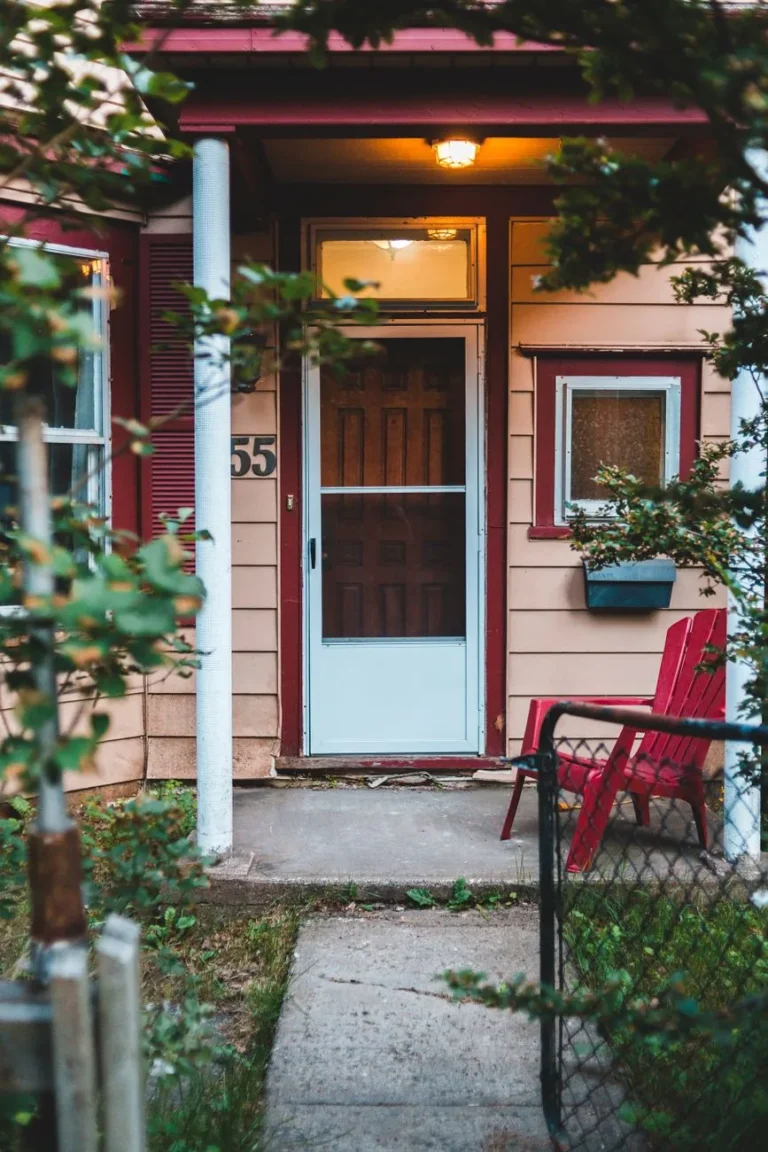
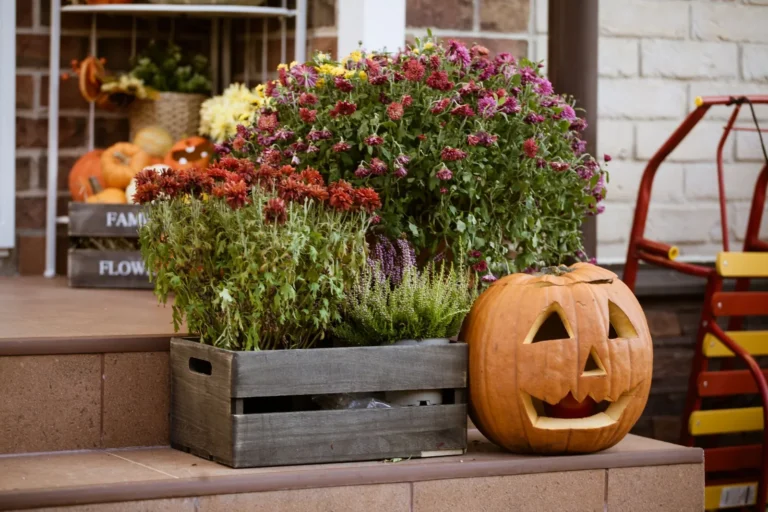
If your front porch cost is still a line item you are weighing, a modest outdoor upgrade — fresh paint on the door, a new house number, a couple of container plants — can buy you a noticeable uplift for under $300 while you plan the bigger project. The interior and exterior should share a color language, so the accent color you choose indoors can echo in the front door or the porch ceiling.
Several of the same principles apply outdoors as inside. A front porch versus patio decision often comes down to whether you want a covered, elevated space (porch) or a ground-level open one (patio), and that choice shapes how much “outdoor entry” area you actually have before the door. If you are considering an enclosed version, factor in the enclosed porch cost early, since a roofed, screened, or glassed entry changes both the light inside the door and how the whole front elevation reads from the street.
Frequently Asked Questions
What is the best entryway layout for a small space?
Keep the footprint shallow. A wall-mounted coat rack with a shelf, a bench no deeper than 15 inches, and a mirror on the opposite wall make a narrow entry feel wider without blocking the walking path. Avoid deep consoles or full cabinets, which crowd a space under 4 feet wide.
How much does a basic entryway makeover cost?
Expect $150 to $500 for a functional refresh — coat hooks, a bench or console, a rug, and a mirror. Adding built-in storage or custom cabinetry pushes the total past $1,500, while a full custom mudroom built-in with seating and cubbies typically runs $2,500 to $3,500 with a contractor.
Should an entryway bench have storage?
For most homes, yes. A bench with cubbies, a flip-top seat, or open shelves underneath does the same visual job as a plain bench while doubling as shoe storage. The only time to skip it is a very tight space where the extra inches of a storage bench would narrow the walkway.
What lighting is best for an entryway?
Layer a ceiling fixture with a warmer accent light. A semi-flush mount or small chandelier as the main source, plus a table lamp or plug-in sconce around 2700K, gives you both even light and a softer, more welcoming warmth. Avoid a single harsh overhead bulb, which flattens the whole space.
Are DIY entryway upgrades worth it versus hiring out?
Renters and first-time homeowners almost always come out ahead doing the basics themselves — hooks, mirrors, rugs, and benches are genuinely one-afternoon jobs. Reserve contractors for built-in cabinetry and electrical work, where the cost of a mistake or a bad install outweighs the labor savings.
The Bottom Line
The best entryway ideas solve a real daily problem before they add beauty. Figure out where the clutter actually lands, buy the seating and storage that fixes it, then layer in light, paint, a rug, a mirror, and a little texture to make the space feel finished. Most homes can get 80 percent of the result for $300 to $500 on a single weekend, and the remaining 20 percent — built-ins, custom color, statement lighting — is where the big-ticket value lives.
Start cheap and functional. Live with it for a month, note what still piles up or looks bare, and spend the next round of money only on what the space has already shown you it needs. For more on the projects that tie into a great entry, see our guides to front porch cost, front porch versus patio, and enclosed porch cost, or check the entryway and mudroom sections at This Old House and Bob Vila for step-by-step project instructions.